
Hazardous area classification groups locations by how often an explosive atmosphere may occur and how long it may last. These zones help determine the precautions needed when selecting, installing and using electrical equipment.
What Is a Hazardous Area?
A hazardous area is a location where an explosive atmosphere may occur in quantities that require special precautions for equipment design, installation and use.
A non-hazardous area is a location where an explosive atmosphere is not expected to occur in quantities that require those precautions.
The distinction matters because electrical equipment can produce sparks or hot surfaces. Electrical equipment for hazardous areas must be suitable for the conditions and installed according to the applicable standards.
What Is an Explosive Atmosphere?
An explosive atmosphere is a mixture of air and flammable substances under atmospheric conditions. These substances may be present as gases, vapors, mists or combustible dust. After ignition, combustion can spread through the remaining unburned mixture.
An explosive gas atmosphere contains flammable gas, vapor or mist mixed with air.
An explosive dust atmosphere contains combustible dust suspended in air as a cloud.
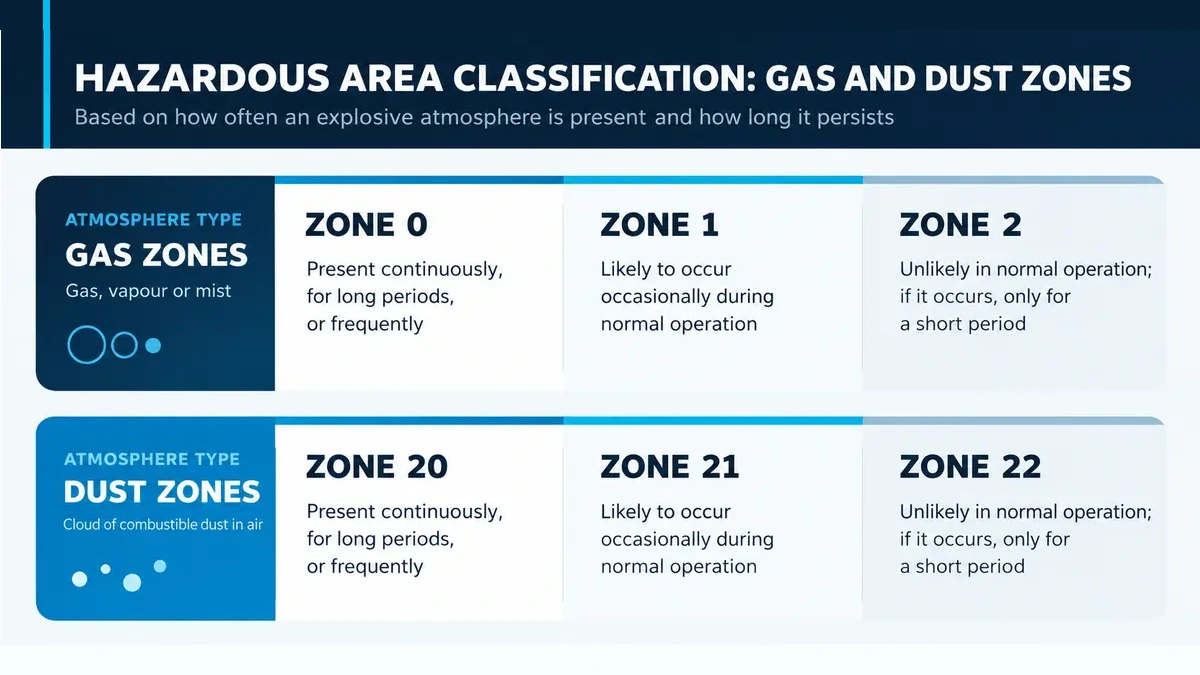
Gas Zones: Zone 0, Zone 1 and Zone 2
Areas where explosive gas atmospheres may occur are divided into three zones according to how frequently they may be present and how long they may remain.
Zone 0
An explosive gas atmosphere is present continuously, frequently or for extended periods.
Zone 1
An explosive gas atmosphere is likely to occur occasionally during normal operation.
Zone 2
An explosive gas atmosphere is unlikely to occur during normal operation. If it does occur, it remains for only a short time.
Dust Zones: Zone 20, Zone 21 and Zone 22
Areas where explosive dust atmospheres may occur follow a similar classification system.
Zone 20
A cloud of combustible dust forms an explosive atmosphere continuously, frequently or for extended periods.
Zone 21
A cloud of combustible dust is likely to form an explosive atmosphere occasionally during normal operation.
Zone 22
A cloud of combustible dust is unlikely to form an explosive atmosphere during normal operation. If it does occur, it remains for only a short time.
In these definitions, normal operation means that an installation is operating within its intended design limits.
HSE definitions of hazardous areas
What the Zone Means for Equipment Selection
The zone describes the likelihood and duration of an explosive atmosphere, rather than the severity of a possible explosion.
Whether selecting explosion-proof junction boxes or other electrical equipment, the zone is only a starting point. Selection also needs to account for the gas or dust involved, temperature limits and the equipment’s protection method. Correct installation and use are just as necessary as choosing suitable equipment.
Choosing suitable equipment is essential, but correct installation, inspection and maintenance are equally important throughout its service life.
For help with product selection, contact NOVUS Electrical with your site’s area classification, operating conditions and equipment requirements.