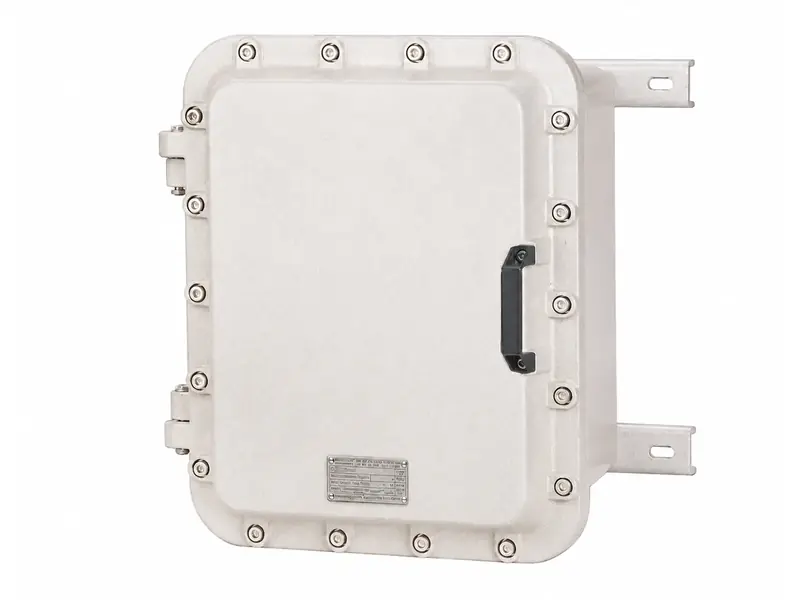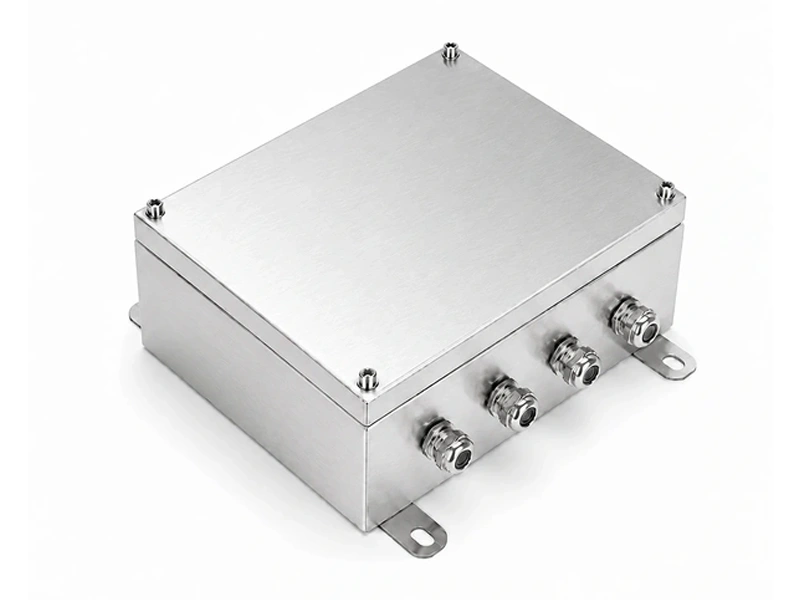
Explore reliable products for cable routing,
connection, control and protection
in hazardous area installations.




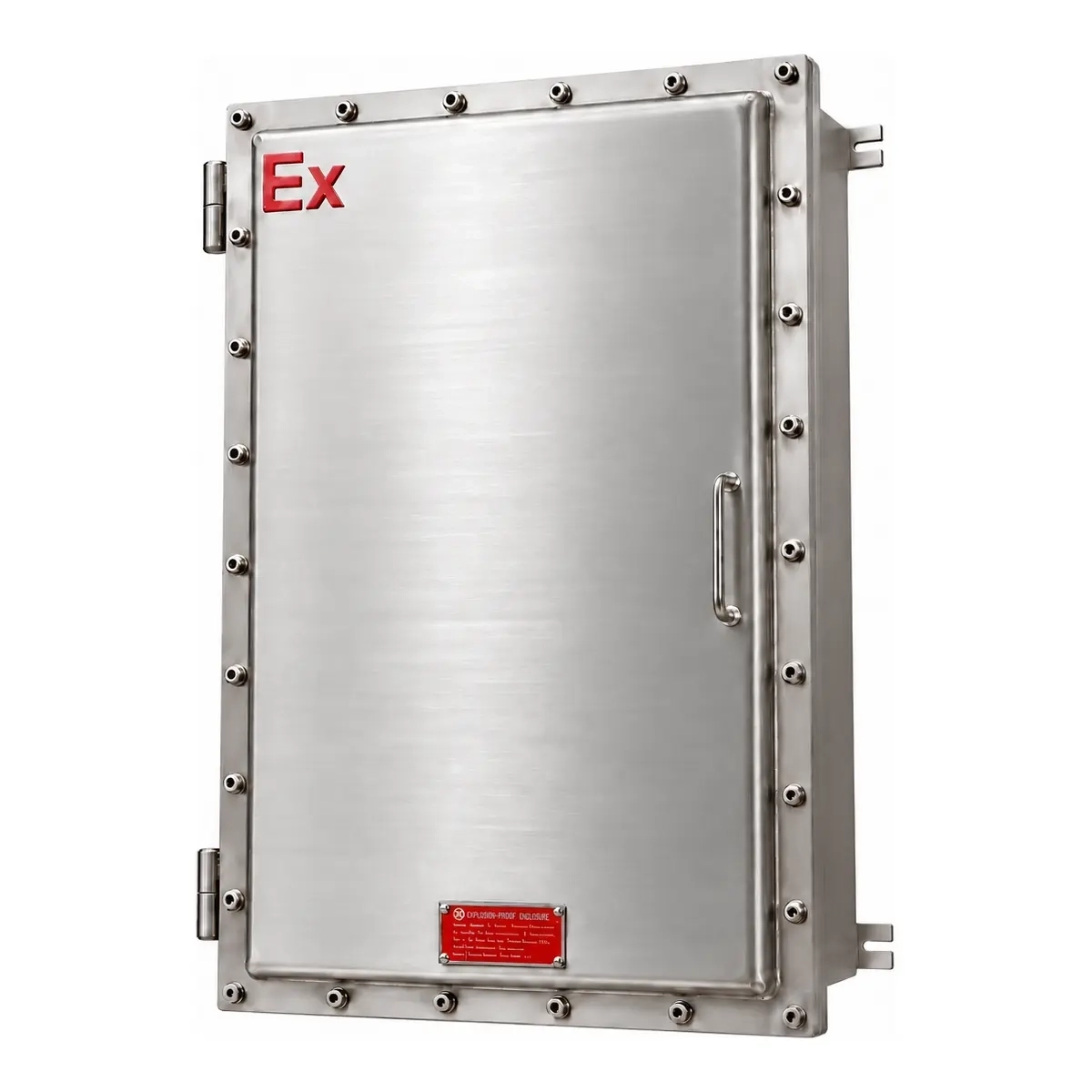
Explosion-Proof Enclosures
BXT-G Series
- Stainless steel construction provides corrosion resistance and mechanical strength.
- Flange versions for installing electrical and control components. Custom drilling and configurations are available on request, subject to the approved enclosure design.
- The large enclosure provides ample space for electrical components and wiring in complex control systems.
Durable door handles and hinges provide smooth, stable opening and closing for safe and convenient operation.
.
TECHNICAL DATA
Explosion Protection
Hazardous Areas
• Zone 1 and Zone 2
• Zone 21 and Zone 22
Explosion Protection Marking
IECEx
Gas
• Ex db IIB T6…T4 Gb
• Ex db IIB+H2 T6…T4 Gb
Dust: Ex tb IIIC T80°C / T95°C / T130°C Db
ATEX
Gas
• II 2 G Ex eb IIC T6 … T4 Gb
• II 2 G Ex db IIB + H₂ T6/T5/T4 Gb
• Dust: II 2 D Ex tb IIIC T80°C/T95°C/T130°C Db
Product Parameters
Enclosure Material
• Stainless steel (AISI 304 or AISI 316L)
• Material properties: Corrosion-resistant, mechanically robust and suitable for harsh industrial environments
Surface Finish: Brushed stainless steel
Ingress Protection: IP66
Ambient Temperature: −40 °C to +40 °C
Cable Entries: Metric M × 1.5 threads as standard; NPT threads available on request
Applicable Industries
Suitable for use in:
• Oil & Gas
• Petrochemical
• Chemical Processing
• Pharmaceutical
• Textile
• Grain Processing
• Power Generation
FAQ
Q1. What is an empty explosion-proof enclosure, and how does it differ from a complete explosion-proof distribution box?
A1. An empty explosion-proof enclosure is supplied without internal electrical components and is designed to house breakers, terminals or control devices. A complete explosion-proof distribution box includes the required components, wiring and cable entries and is ready for use.
Q2. Will assembling the enclosure myself affect the overall explosion-proof certification?
A2. Yes. The enclosure and all installed components must comply with the applicable explosion protection and certification requirements. Assembly must be carried out by qualified personnel in accordance with the manufacturer’s instructions. Improper assembly or unauthorized modifications may invalidate the equipment’s certification. The party carrying out the assembly is responsible for ensuring that the completed equipment meets all applicable requirements.
Q3. Should I choose 304 or 316L stainless steel?
A3. 304 stainless steel is suitable for many general industrial and humid environments. Although 316L is typically more expensive, its higher corrosion resistance makes it a better choice for chemical plants, coastal areas, offshore facilities and other highly corrosive locations.
Q4. What information is required for a quotation?
A4. Please provide the enclosure dimensions, stainless steel grade, mounting requirements, cable entry sizes, thread types and locations, required Ex marking, quantity and installation environment. Drawings or photos are also helpful if available.