
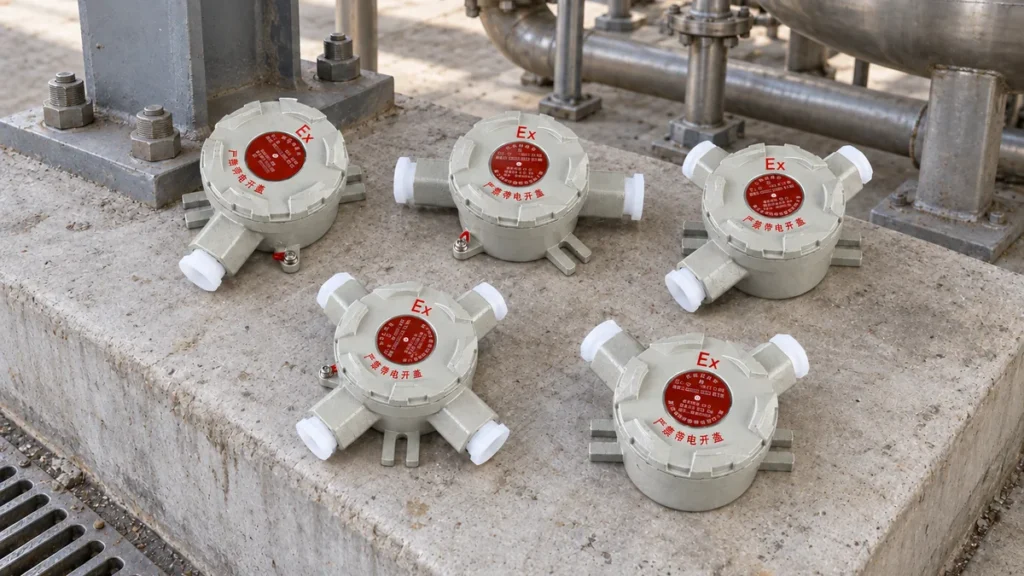
What Is an Explosion-Proof Terminal Box?
Explosion-proof terminal boxes house electrical terminals and cable connections in hazardous areas where flammable gases or vapors may be present. Metal enclosures are available in cast aluminum and stainless steel, with the material chosen to suit the installation environment.
In a flameproof (Ex d) design, flammable gas may enter the enclosure. If a spark ignites the gas inside, the enclosure is designed to withstand the resulting explosion pressure and prevent flames or hot gases from igniting the surrounding atmosphere.
Choosing the right box and installing it correctly are essential for safe operation. This guide introduces the main product features and provides selection advice for engineers, installers and maintenance teams.
Where Are Explosion-Proof Terminal Boxes Used?
Explosion-proof terminal boxes are used to connect power, control and instrument cables in hazardous areas. Common applications include oil refineries, offshore platforms, gas facilities, chemical plants and mining operations. They are also used in pharmaceutical and food processing areas where combustible dust may be present.
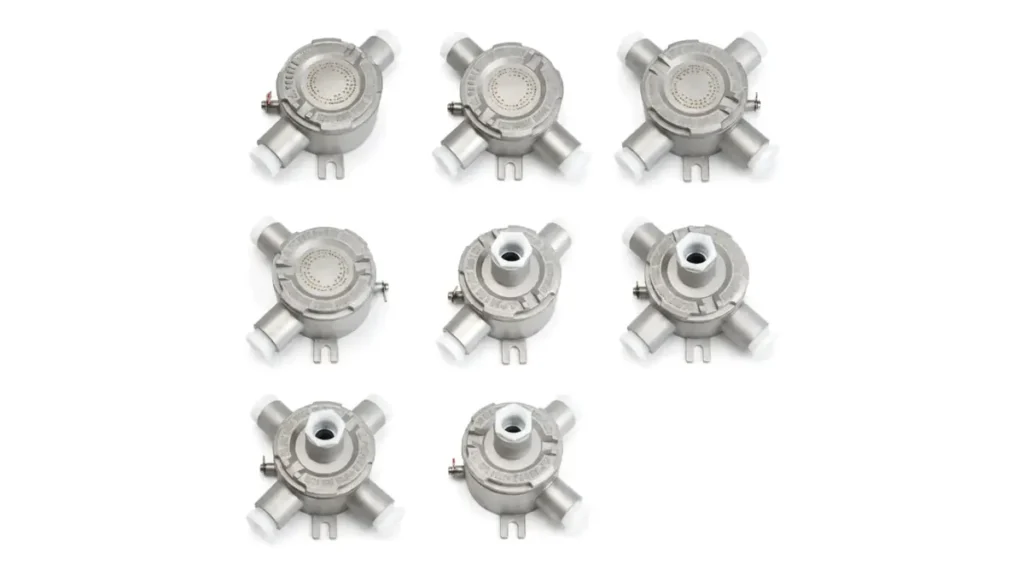
How to Choose the Right Explosion-Proof Terminal Box
Step 1: Ex Marking
Start with the hazardous-area classification. The box’s protection type, gas or dust group and temperature limits must match the site requirements.
For gas atmospheres:
- IIB-rated equipment is suitable for IIB gases such as ethylene and IIA gases such as propane.
- IIC-rated equipment is suitable for gases such as hydrogen and acetylene. It also covers IIA and IIB gas groups.
Step 2: Enclosure Material
The material of an explosion-proof terminal box determines its service life:
Cast aluminum explosion-proof terminal boxes are lightweight and cost-effective, with good heat dissipation.
Stainless steel explosion-proof terminal boxes offer excellent corrosion resistance. Common grades include 304 and 316.
Step 3: Cable Entries
Common thread options include metric (M), BSP and NPT. The cable gland’s thread type and size must match the enclosure entry.
Step 4: Terminal Blocks
Confirm that the current rating, such as 10 A, 20 A or 100 A, meets the load requirements. Also check the voltage rating, conductor size and number of terminals needed.
How to Choose the Right Explosion-Protection Rating for a Terminal Box
This is a common source of selection errors. Start by identifying the flammable gases or vapors that may be present at the installation site.
- IIB-rated equipment: Suitable for IIB gases such as ethylene, as well as IIA gases such as propane.
- IIC-rated equipment: Suitable for IIC gases such as hydrogen and acetylene. It also covers IIA and IIB gas groups.
The equipment’s temperature class and other certification requirements must also match the application.
Pre-Installation Precautions
- Check that the technical data on the nameplate match the actual operating conditions.
- Check all fasteners and tighten any that are loose.
- Ensure that the terminal box’s internal and external grounding connections are secure and reliable.
- During installation, pass the cable through the sealing ring and metal washer, then tighten the compression nut to ensure a proper seal and hold the cable firmly in place.
- Seal unused cable entries with the specified sealing rings and metal blanking discs.
- Disconnect the power supply before opening the cover for inspection or maintenance.
Looking for Explosion-Proof Terminal Boxes?
Send us your required Ex marking, terminal configuration and cable-entry details for a quotation.